
Squad rotation and fixture congestion
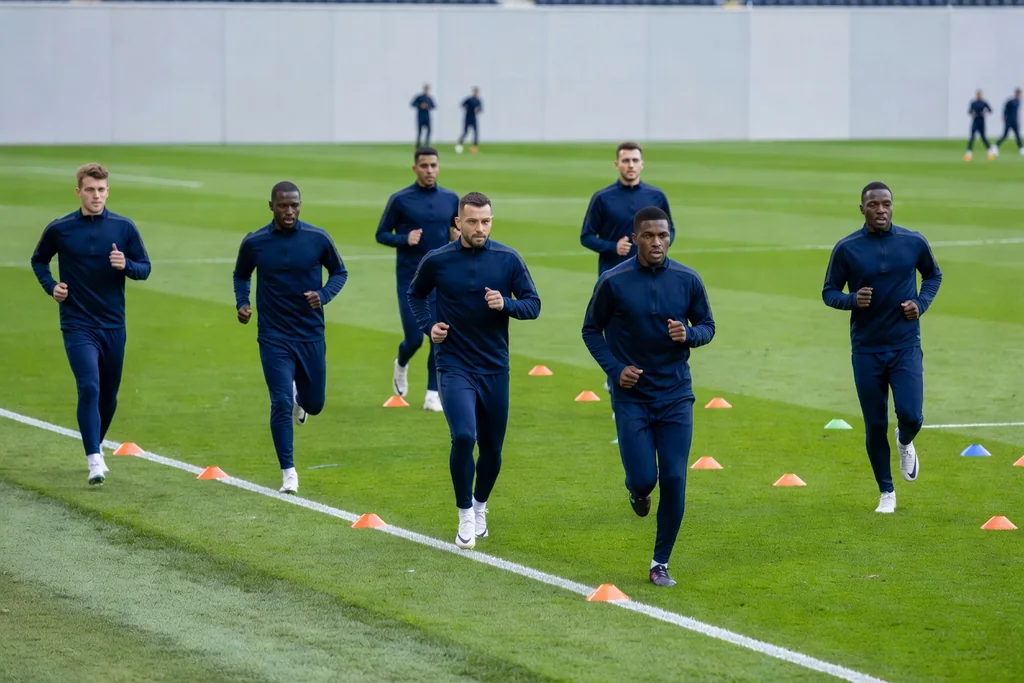
Fixture congestion is the condition of modern top-level football. Domestic leagues, cup competitions, continental fixtures and international windows all compete for the same weeks, and the players are the ones who absorb the load. Squad rotation is the main tool clubs use to manage it, and it is far more strategic than the old accusation of resting players suggests.
This article explains why managers change their line-ups, how squads are built to cope with a crowded calendar and what rotation does to form, cohesion and the way supporters read a team sheet.
Why the calendar is so crowded
A club competing on several fronts can play in the league, a domestic cup, a continental competition and, for its internationals, the fixtures that sit outside the club calendar entirely. Those commitments overlap, and when a fixture is postponed it is normally rescheduled into an already busy midweek rather than removed.
The result is a season in which a club can play two matches a week for months. Recovery between matches becomes the scarcest resource in the game, and how a club manages it often decides how its season ends.
Why managers rotate
Rotation is not favouritism and it is not punishment. It is workload management. Players have limits on how much high-intensity football they can absorb before performance drops and injury risk rises, and a manager who ignores that eventually pays for it with an unavailable squad at the worst possible moment.
Rotation also has a tactical purpose. Different opponents demand different profiles: a winger who stretches a deep defensive block is not necessarily the right player against a high line, and a midfielder who wins second balls is not always the right choice against a side that passes through pressure.
How squads are built for it
Recruitment at the biggest clubs is shaped by the calendar as much as by the starting eleven. Clubs look for a squad with cover in every position, players who can cover more than one role, and a blend of experience and younger legs who can be trusted in low-risk fixtures.
That is why two players of similar quality often arrive for the same position. The aim is not to collect talent but to have no week of the season in which the drop in quality is decisive.
Squad planning is also where the calendar and the transfer market meet. A club that expects a long continental run will look for depth it would not otherwise need, while a club with a lighter calendar can afford a smaller group. When those expectations turn out to be wrong, the squad looks either thin or bloated for the rest of the season.
What rotation costs
Rotation has real downsides, and pretending otherwise is dishonest. Combinations need time together to become automatic, and a constantly changed line-up can look disjointed even when every individual is performing well.
- Playing relationships take repetition to develop.
- Supporters read changes as signals, sometimes wrongly.
- Fringe players need enough minutes to stay sharp.
- Changing a winning side carries its own risk.
- Injuries and suspensions can force decisions anyway.
What it means for supporters
Team sheets are best read as a statement about the calendar rather than a verdict on the coming match. When a manager makes several changes, the question to ask is what the following week looks like, not what the manager thinks of the players he left out.
| Situation | Typical approach | What to watch |
|---|---|---|
| Two matches in a week | Partial rotation in the less demanding fixture | Which competition is prioritised |
| Three matches in a week | Heavier changes across the squad | Whether combinations still function |
| Cup tie against a lower-ranked side | Opportunity for squad players | Whether the pattern of play survives |
| Decisive league fixture | Strongest available eleven | Who is genuinely first choice |
| After an injury crisis | Cautious reintroduction of returning players | Manageable minutes, not full matches |
The trade nobody avoids
Every club with a crowded calendar faces the same trade: freshness against cohesion. There is no solution that avoids the trade entirely, only a choice about which side of it to favour in a given week. Managers who handle that choice well tend to be the ones still competing in spring.
Supporters can use the same logic when judging a manager’s decisions. Asking why a particular player was left out is less useful than asking what the next fortnight looks like and which matches the club considers most important. Once the calendar is in view, a team sheet that looked inexplicable on Saturday often looks obvious by Wednesday, and the manager is judged on the season rather than on a single afternoon.
Read next
How a Premier League season is organised
The shape of an English top-flight campaign, from the opening round to the final matchday.
What a matchday at an English ground involves
From the turnstiles to the final whistle: how a home fixture runs from a supporter’s view.
Promotion, relegation and the league pyramid
How clubs move between divisions and what survival or promotion actually decides.