
Promotion, relegation and the league pyramid
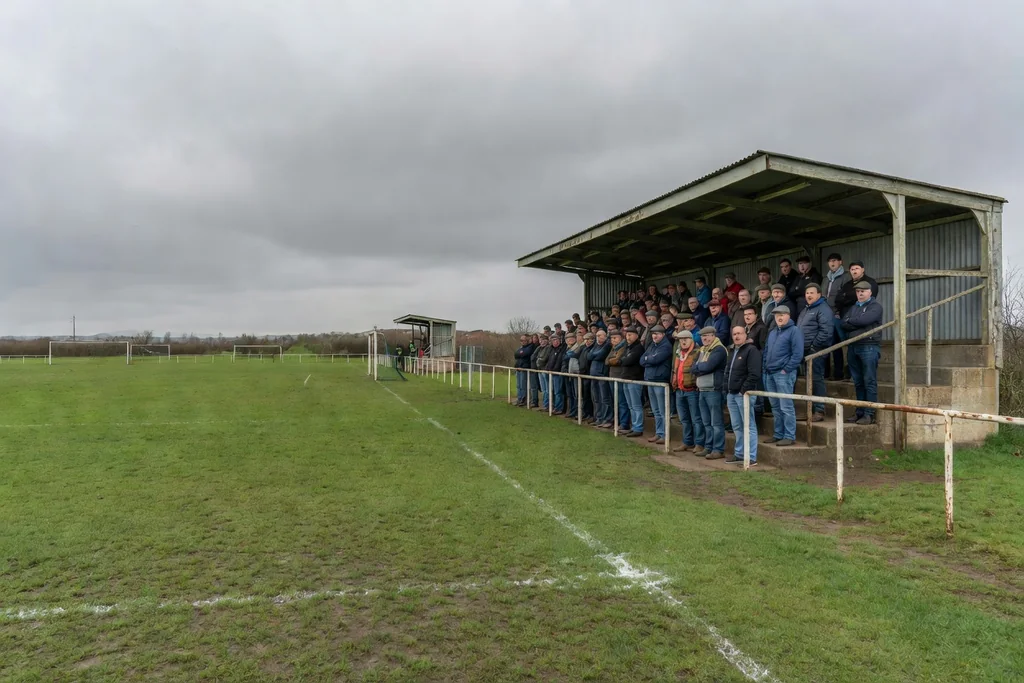
Promotion and relegation are what make league football a continuous story rather than a closed competition. Clubs move between divisions at the end of every season, and those movements reshape the leagues above and below them in ways that are felt for years. The mechanism is simple to describe and surprisingly consequential to live through.
This article explains how clubs move between divisions in English football, what the pyramid actually means and why finishing one place higher or lower can change a club’s entire trajectory.
The idea of a pyramid
English football is organised as a pyramid. At the top sit the national divisions, and beneath them a widening set of regional and local leagues. Each level feeds the one above it, so in principle a club can climb from grassroots football to the national stage through results alone rather than by invitation.
The pyramid is not a metaphor so much as an administrative fact. Every division has a defined relationship with the one above and below, and the promotion and relegation places at each level are agreed before the season begins rather than decided afterwards.
How relegation works
At the end of a season, the clubs finishing in the lowest positions of a division are relegated to the level below. The number of places depends on the division and is published in advance. Relegation is automatic: there is no vote, no appeal against the sporting outcome and no protection for a club’s history or size.
That automaticity is the source of the drama. A club can spend a decade in the top division and still be removed from it on the final afternoon, which is precisely what keeps the bottom of the table compelling throughout the winter.
How promotion works
At the other end, the highest-finishing clubs go up automatically while the places immediately below them contest a play-off. The play-off format gives several clubs a genuine route to promotion through a short knockout competition at the end of the season, and it is one of the most-watched events in the football calendar.
The combination of automatic and play-off promotion means that a club finishing outside the top places can still be promoted, while a club finishing higher can miss out. That asymmetry is deliberate: it keeps the final weeks of the season meaningful for a much larger group of clubs.
It also means that the end of a season can be decided by a single afternoon in a way that no other part of the campaign is. A play-off final is a one-match verdict on a year of work, and clubs plan their entire spring around the possibility of reaching it. Whatever a supporter thinks of the format, its effect on the shape of the season is impossible to ignore.
What clubs have to satisfy off the pitch
Sporting merit is only part of the picture. Divisions impose requirements on promoted clubs that go beyond the pitch, and these conditions are checked before a promotion is confirmed.
- Ground and stadium standards set by the division.
- Financial and licensing requirements, including ownership checks.
- Deadlines for submitting the required documentation.
- Broadcast and commercial obligations attached to the division.
- Any transitional arrangements for clubs moving between levels.
Why the margins matter so much
The difference between one league position and the next is not cosmetic. It changes revenue, the calibre of opponent, the attractiveness of the club to players and the pressure on the manager. A single goal late in the season can move a club between those worlds.
| Outcome | Sporting effect | Where it is confirmed |
|---|---|---|
| Title or top places | Champion and European qualification | League standings and regulations |
| Automatic promotion | Move up to the division above | League standings |
| Play-off place | A chance of promotion through a knockout | League regulations |
| Mid-table finish | Another season at the same level | League standings |
| Relegation | Drop to the division below | League standings |
Following the bottom of the table
Promotion and relegation are best understood by watching both ends of a division at once. The top explains what a club is playing for, and the bottom explains what it is playing against. Together they turn a league table into something closer to a scoreboard for an entire ecosystem of clubs.
That ecosystem is worth keeping in mind the next time a promotion or relegation is reported as a single moment. The consequence is never confined to the club that moved. A relegation pushes a club out of a division and pulls another one up; a promotion opens a place below it that has to be filled; and the effects ripple downwards through the levels until they reach the local leagues. The pyramid is a system, and every result at its top rearranges something at its base.
Read next
How a Premier League season is organised
The shape of an English top-flight campaign, from the opening round to the final matchday.
What a matchday at an English ground involves
From the turnstiles to the final whistle: how a home fixture runs from a supporter’s view.
How English clubs qualify for Europe
The routes into continental competition and why the final table decides more than the title.