
How a Premier League season is organised
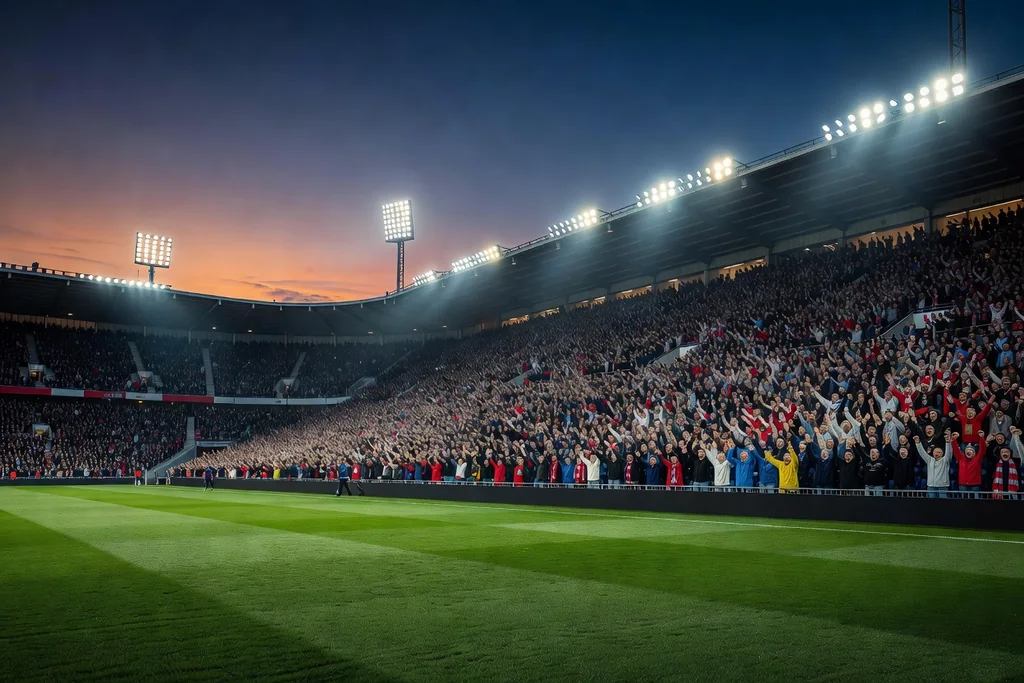
The Premier League season is a long, structured campaign rather than a series of isolated matches. Every club plays every other club twice, once at home and once away, and that symmetry is what makes the final table a fair comparison across the whole division. Understanding the structure makes the season far easier to follow, because you can see why certain weeks carry more weight than others and why a slow start is not automatically fatal.
This article explains how an English top-flight campaign is put together: the shape of the fixture list, the rhythm of a matchday week, what the final table actually decides and where the authoritative rules live. We describe the mechanics of the competition, not the results of it.
The shape of the campaign
A league season runs from late summer to late spring. Each club meets every rival twice, so the fixture list is symmetrical: whatever a club does to an opponent at home must be repeated at that opponent’s ground later in the campaign. That symmetry is the entire point of a double round-robin, and it is the reason a league table only becomes meaningful once the season is well advanced.
The opening weeks are the least informative part of the year. Fixtures are unevenly distributed, squads are still settling after the transfer window has closed and promoted clubs are adjusting to a higher standard. Judgements formed in that period tend to age very badly.
Home and away, and why it matters
Home advantage is the reason the double round-robin exists. Playing in front of your own crowd, on a familiar pitch, without travelling on the morning of the match, is a real advantage in professional football. A single round of fixtures would hand that advantage to half the division and distort the competition from the start.
The home-and-away structure also gives each fixture its own narrative. A heavy home defeat in autumn can be revisited in spring, and the away trip that follows becomes a separate contest with its own tactics and its own pressure.
The matchday calendar
Fixtures are not spread evenly through the week. Most rounds are scheduled across a weekend, but individual matches are moved for broadcast, for European commitments or for policing requirements. That reshuffling produces the familiar pattern of Saturday afternoons, Sunday fixtures and the occasional midweek round.
For supporters the practical consequence is that the calendar is never fully fixed. Television selections, cup runs and continental fixtures all pull matches away from their original slot, which is why the official fixture list rather than a printed poster is the version worth trusting.
What to check at the official source
League rules change from season to season, and the tie-breakers used to separate clubs on equal points are a good example of something supporters often misremember. Instead of relying on a summary, go to the competition itself.
- The official handbook for the current season’s rules.
- The tie-break criteria used when clubs finish level on points.
- The confirmed date of the next fixture release and any rescheduling.
- The disciplinary thresholds that trigger a suspension.
- The published qualification places for continental competition.
What the final table decides
The table answers more than one question. At the top it decides the champion and, because of how European qualification works, several other places besides. At the bottom it decides which clubs drop into the division below. In between sits a large middle where clubs are playing for a European place, for prize money or simply to avoid being dragged into a relegation fight.
| Stage of the season | What it usually decides | Where to verify |
|---|---|---|
| Opening weeks | Very little, squads are still settling | Official fixture list |
| Autumn | The first reliable shape of the table | League standings |
| Winter | Whether a club is in a title, European or relegation race | League standings |
| Run-in | The champion, the European places and relegation | League regulations |
| Final matchday | Everything still undecided | Official results |
A season you can read
Followed that way, the campaign stops being a wall of results and becomes a structure with recognisable phases. The names change, the managers change and the table changes, but the shape of the season stays the same, which is exactly what makes it worth understanding in the first place.
One practical habit makes the structure even clearer: follow the table rather than the headlines. A club that sits in the same position for two months is telling you something different from a club that moves several places every week, and the direction of travel usually matters more than the snapshot. By spring, the shape of the campaign is legible to anyone who has been reading it steadily rather than checking in occasionally.
Read next
What a matchday at an English ground involves
From the turnstiles to the final whistle: how a home fixture runs from a supporter’s view.
Promotion, relegation and the league pyramid
How clubs move between divisions and what survival or promotion actually decides.
How English clubs qualify for Europe
The routes into continental competition and why the final table decides more than the title.