
Set pieces and how they are prepared
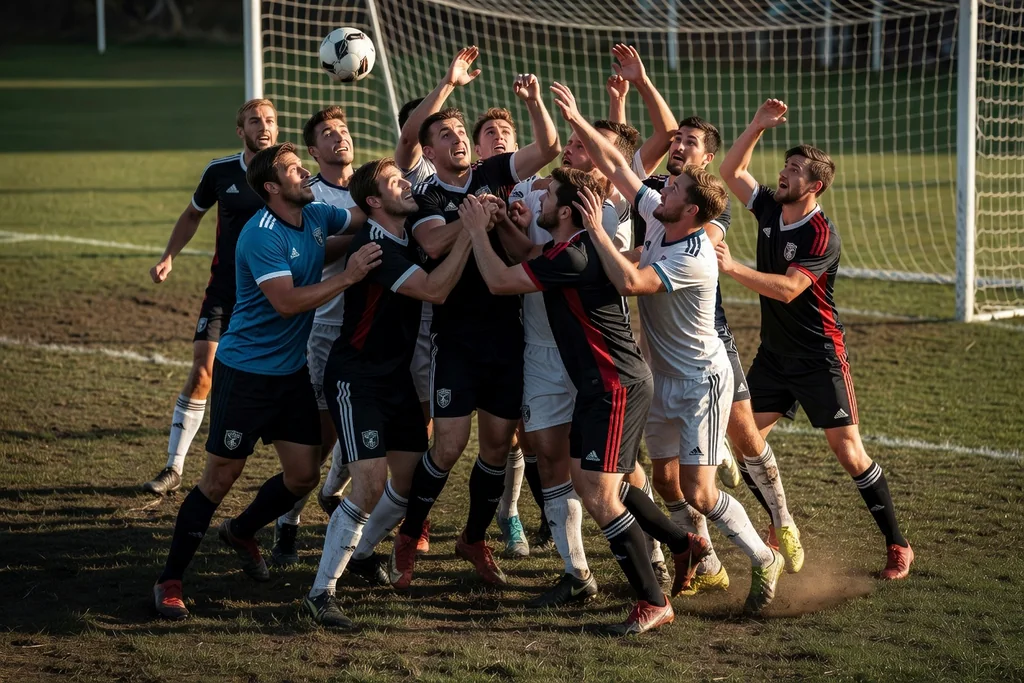
Set pieces are the most rehearsed part of football and the least spontaneous. Corners, free kicks and long throw-ins are prepared in training, assigned to specific players and executed according to routines that the coaching staff have designed and drilled. Treating them as random events is a mistake that costs supporters a great deal of understanding.
This article explains how set pieces are prepared, what makes a routine work, how teams defend them and why the difference in preparation between clubs is often visible in the results.
Why set pieces get so much attention
A set piece is a controlled situation. The ball is stationary, the players are in known positions and the opponent has had time to organise. That makes it possible to plan in detail in a way that open play never allows, and it means a well-drilled team can create genuine chances from a situation that looks static.
Because they are repeatable, set pieces also reward practice disproportionately. A routine that works can be used in every match, and the marginal gain from rehearsing it thoroughly is larger than the gain from almost any other part of training.
How a routine is designed
Design begins with the delivery. Coaches decide whether the ball will be played in-swinging or out-swinging, whether it will go to the near post, the far post or the edge of the area, and how quickly it will arrive. Each choice suits different players and different opponents.
The movement is designed around the delivery. Attackers often start in one position and move late, using blocks and screens to create separation from their markers. The aim is not simply to win the header but to arrive unmarked at the point where the ball is going.
Defending a set piece
Defending teams have to choose between marking individuals and defending zones, and most use a mixture. Zonal defending assigns players to areas of the penalty box rather than to opponents, while man-marking assigns each defender a specific attacker. A hybrid approach uses both at once.
Whatever scheme is chosen, the goalkeeper’s decision-making is central. Whether to come for the ball, stay on the line or leave the decision to the defenders largely determines how confident the defensive block looks.
What makes a set piece routine work
The difference between a threatening set piece and a wasted one usually comes down to a small number of details that can be trained.
- The quality and consistency of the delivery.
- Timing of runs so attackers arrive as the ball does.
- The use of blocking to create space for a designated target.
- Second-ball positioning for the players not attacking the first header.
- Rehearsal of the routine until the movements are automatic.
Throw-ins and long balls into the box
Long throw-ins can function as set pieces in their own right, turning a throw in the attacking third into a delivery comparable to a corner. Defending them is awkward because the ball arrives with a different trajectory and because the penalty for conceding is high.
Free kicks close to goal present a different problem, since a direct shot is always an option. Teams often rehearse several variations from the same position so the defending side cannot prepare for a single routine.
Reading a set piece as it happens
The value of watching set pieces closely is that everything is visible. The delivery, the runs and the defensive scheme are all on display in a few seconds, and comparing the two boxes gives a clear view of how each team has prepared.
| Situation | What the attacking team does | What the defenders must answer |
|---|---|---|
| Corner from the left | Choose a near-post or far-post delivery | Decide who attacks the first ball |
| Free kick at the edge of the box | Offer both a shot and a rehearsed routine | Commit to a wall or a man |
| Long throw into the area | Treat the throw as a cross | Win the first contact |
| Short corner | Create a new angle for the delivery | Reorganise without losing shape |
| Second ball after a clearance | Recycle possession and re-load the box | Push out without being caught narrow |
Prepared, not lucky
Set pieces produce some of the most dramatic moments in football, and they are often described as lucky. They are not. Behind almost every goal from a corner sits a rehearsal, a designated delivery and a designed movement, and the teams that score from set pieces most often are usually the teams that practise them most carefully.
Read next
Formations and how teams shape up
What a formation describes, what it hides and how shape changes without the ball.
Build-up play from the back
Why teams start with the goalkeeper and how they beat the first line of pressure.