
How to read a match as it unfolds
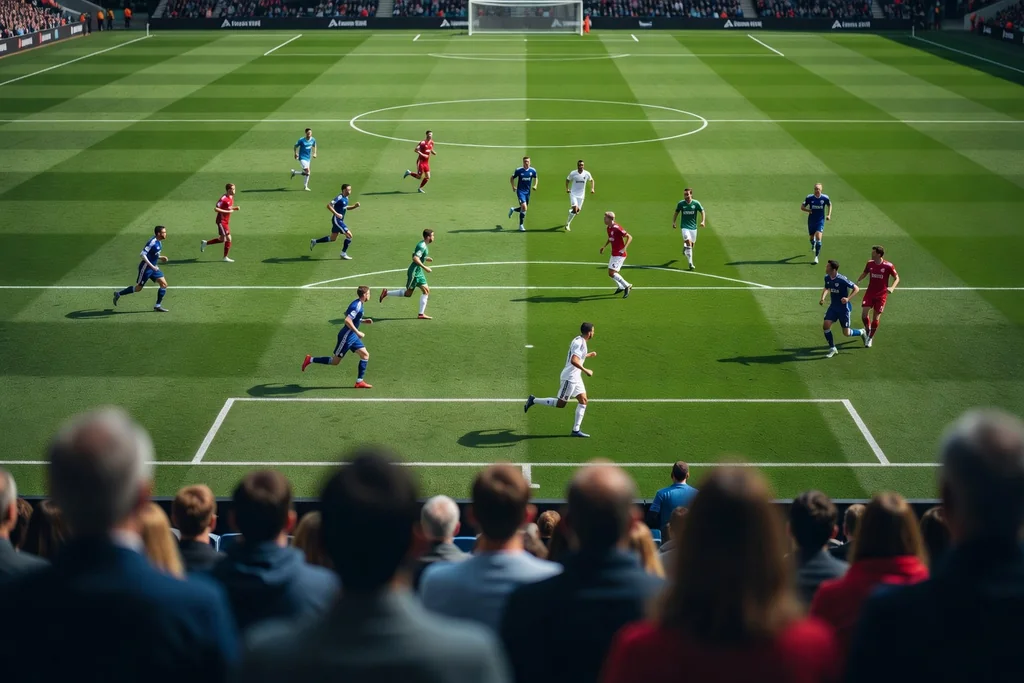
Reading a match is a skill, and like most skills it improves with a method rather than with more information. Watching a game and simply following the ball is enjoyable, but it rarely tells you why one team is winning or why the pattern of play keeps repeating. A few deliberate habits will show you far more.
This article offers a method for following a match as it unfolds: what to watch before the first whistle, what to look at during the game and how to work out what a coach is changing.
Before the whistle
The first three minutes are the most informative. During that period both teams are playing exactly what they rehearsed, before the scoreline or fatigue forces adjustments. Watch the shape of each team without the ball and note where the space is.
The warm-up is informative too. Which defenders are asked to play short passes, which players practise deliveries, and who takes the set pieces are all visible before kick-off, and each of those details tells you something about the plan.
Following the shape, not the ball
The single most useful habit is to watch the players away from the ball. Where is the defensive line? How many players are ahead of the ball when the team attacks? Which side of the pitch is overloaded and which is left open? Those questions reveal the structure that the ball is moving through.
The ball is only the latest event. The structure is the story, and it explains why the ball went where it did. Once you follow the structure, most passes stop looking random and start looking inevitable.
Noticing the adjustments
Matches change because coaches change them. A team that was pressing high may drop deeper after a warning; a team that kept the ball may start playing long. Those shifts are usually deliberate and they are the most interesting moments in a match.
The clearest signals of an adjustment are the ones that involve multiple players at once: a winger switching flanks, a midfielder dropping into a different zone, or a full-back who stops advancing. A single change is often a mistake; a change repeated becomes a new plan.
A checklist for watching
Rather than trying to see everything, it helps to have a short list of questions and to answer them progressively through the match.
- What shape does each team hold when it does not have the ball?
- Where does each team try to win the ball back?
- Which side of the pitch is being deliberately overloaded?
- Who is left with the least protection when the ball is lost?
- What has changed since the first fifteen minutes?
Using the scoreline carefully
The scoreline is the least useful guide to what is happening, at least in the short term. A team can dominate a half and trail, or be outplayed and lead. The score changes behaviour, not the reverse, so it is worth noting how each team reacts to its scoreline and whether the reaction is patient or panicked.
Half-time produces the most visible reaction of all, and comparing the first five minutes of the second half with the last five of the first will often show you exactly what was said in the dressing room.
A habit worth building
Reading a match does not require technical expertise, and it does not require statistics. It requires attention to the parts of the pitch where nothing is happening yet, which is precisely where the next phase of play is being prepared.
| Moment | What to watch | What it tells you |
|---|---|---|
| First three minutes | The starting shape of both teams | What each side rehearsed |
| Mid first half | Where the space is and who is using it | Which team’s plan is working |
| Just before half-time | Whether either team has changed approach | The first tactical adjustments |
| Start of second half | Any visible change in personnel or shape | What the interval changed |
| Final twenty minutes | Who is committing players forward | Which team is chasing the result |
The match behind the match
Once you begin watching this way, a football match stops being a single event and becomes a contest between two plans. The ball still matters, of course, but the more interesting question is what each team was trying to do and how well the other side prevented it.
It is a habit that pays off over a season rather than in a single match. Supporters who watch this way begin to recognise patterns before they produce goals, which makes the game more enjoyable rather than less, and they also learn to distinguish between a team that is genuinely struggling and one that is simply having an unlucky afternoon. That distinction is the difference between reacting to every result and understanding it.
Read next
Formations and how teams shape up
What a formation describes, what it hides and how shape changes without the ball.
Build-up play from the back
Why teams start with the goalkeeper and how they beat the first line of pressure.