
The growth of the professional women’s game
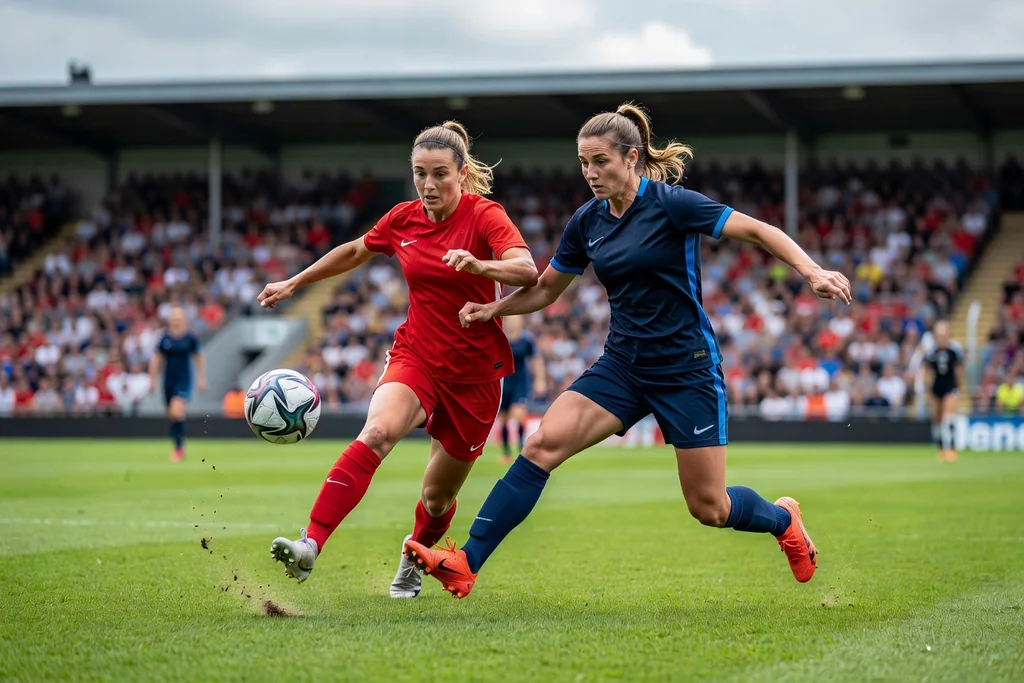
The professional women’s game has grown faster than any other part of football over the past decade, and the growth has been structural rather than temporary. Full-time contracts, dedicated leagues, improved facilities and much larger audiences have changed what a career in the women’s game looks like, and the change is still underway.
This article looks at how the professional women’s game has developed, what has driven the growth, what challenges remain and why the professional structures matter so much.
From amateur to professional
The most important change in the women’s game has not been attendance or coverage but employment. As clubs began offering full-time contracts, players were able to train daily rather than around another job, and that shift raised the standard of play across the board.
Professionalism is cumulative. Full-time training improves players, improved players raise the standard of the league, and a better league attracts more attention, which in turn generates the revenue to sustain full-time contracts. The cycle is difficult to start and difficult to reverse once it is running.
What has driven the growth
Several factors have combined. Investment by established clubs brought resources and facilities. Broadcast coverage increased visibility and made the game easier to follow. Major tournaments gave the sport a regular global stage, and the audiences for those tournaments grew sharply with each cycle.
None of those factors works alone. A tournament generates interest, but the interest only converts into a following if there is a league to watch and players the audience can recognise. The growth has come from the pieces connecting rather than from any single event.
What has changed for players
For an individual player, the professionalisation of the game has changed almost everything, from training hours and medical support to contract terms and career length.
- Full-time contracts and the ability to train daily.
- Access to proper medical, sports science and recovery facilities.
- Dedicated leagues with regular fixtures and promotion between divisions.
- Broader media coverage and greater recognition.
- Better defined contractual protections and career pathways.
The challenges that remain
Growth does not remove the difficulties, and the women’s game still faces several. Levels of professionalisation vary widely between leagues and between countries, meaning a player’s experience depends heavily on where she plays. Investment is uneven, and some leagues remain far more financially secure than others.
Commercial development is another area of work in progress. Larger audiences do not automatically produce larger revenues, and clubs have had to build commercial relationships that had no equivalent in the men’s game. Building that commercial base takes time and consistency.
Why professional structures matter
The most consequential development has been the creation of professional league structures with promotion, relegation and defined standards. Those structures give clubs something to build towards, give players a clear pathway and create the regular competition that both supporters and broadcasters need.
Leagues with a stable structure can plan. Clubs know what standard they must meet, players know what a career looks like, and supporters know when and where to watch. That predictability is what turns interest into a settled following.
What to watch as the game develops
The direction of travel is visible in a small number of indicators that are worth following over the coming years.
| Area | What to watch | Why it matters |
|---|---|---|
| Contracts | Whether more players are full-time | It determines the standard of play |
| Leagues | New professional divisions and their standards | They give clubs a structure to build on |
| Attendance | Whether regular crowds grow alongside big events | It shows interest is sustained, not occasional |
| Facilities | Investment in grounds and training bases | It affects preparation and player welfare |
| Broadcast | Consistency of coverage rather than one-off events | It makes the game a habit for supporters |
Growth that has to be built
The professional women’s game has moved quickly, but the work that remains is patient work: contracts, structures, facilities and commercial relationships built season by season. The progress so far is real, and the measure of the next decade will be how much of it becomes permanent.
Read next
Transfer market: the trends shaping deals
Longer contracts, structured fees and the changing balance between buyers and sellers.
Data and analytics in modern football
How clubs use information to recruit, prepare and evaluate, and what it cannot do.
Stadium development and the matchday experience
Rebuilds, safe standing and the push to improve what a trip to the ground feels like.