
International breaks explained
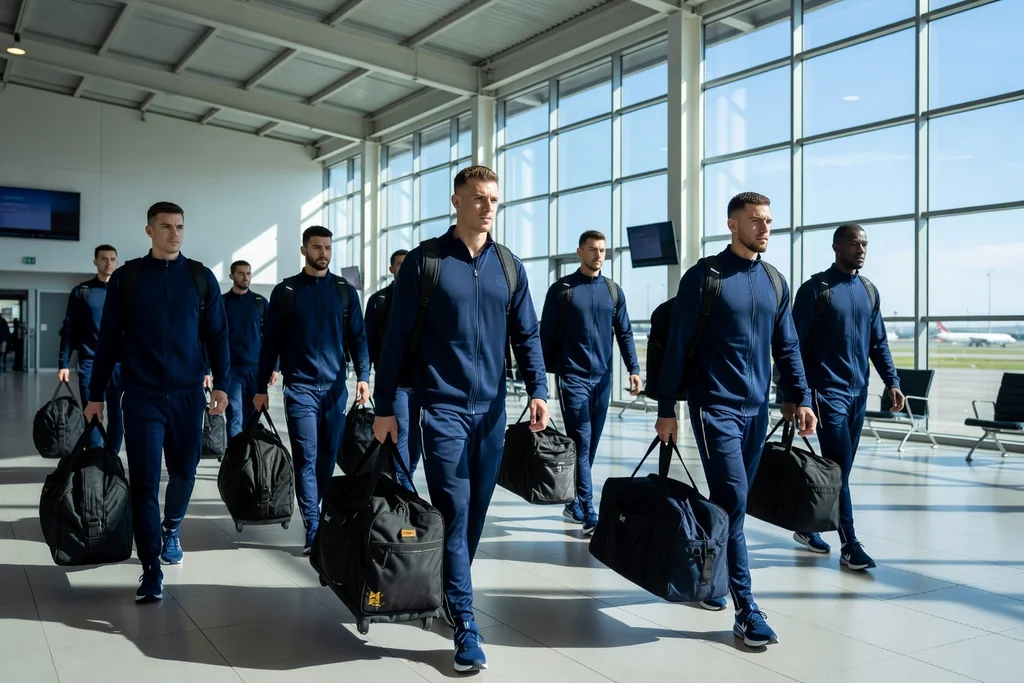
International breaks are the periods in the football calendar reserved for national teams. Domestic leagues pause, players travel to join their countries, and the club season resumes a week or two later with squads that have been scattered across the world. The breaks are a structural feature of the modern game rather than an interruption of it.
This article explains why international breaks exist, how the calendar is shared between clubs and countries, what happens during a break and why the arrangement generates so much friction.
Why the calendar has to be shared
Club football and international football compete for the same players and the same weeks. If every competition scheduled its own fixtures without reference to the others, players would be asked to appear in two places at once. The international match calendar exists to divide the available dates between them.
The calendar is agreed at a global level and defines the windows in which national teams may play. Domestic leagues then schedule around those windows, which is why a league programme can look irregular and why supporters are sometimes surprised to find no club football on a particular weekend.
What happens during a break
During a break, national teams assemble, train together and play their fixtures. The competitive ones are qualification matches or tournament games, and the others are friendlies arranged for preparation. For a player, the break means travel, a change of system and a different group of teammates within days of leaving his club.
The logistical load falls heavily on international players at large clubs. A player can travel thousands of kilometres, play twice in a week and return to his club days before a domestic fixture, with the recovery and adaptation compressed into that short period.
Why clubs and countries disagree
The interests of clubs and national associations diverge in predictable ways. A club pays a player’s wages and wants him fit and rested for its own fixtures. A national association selects the best players available and wants them for the matches that decide qualification. Neither position is unreasonable, and the calendar is the compromise between them.
Injuries during international duty sharpen the dispute. A club can lose a key player for months to an injury sustained in a match that has no bearing on its own season, and that asymmetry is the source of most of the friction between the two sides.
How the tensions are managed
Several mechanisms exist to balance the demands, and they are revised periodically as the calendar evolves.
- Agreed windows that limit when national teams may call players up.
- Release rules that oblige clubs to make players available.
- Insurance arrangements covering injury while on international duty.
- Restrictions on the number of fixtures in a window.
- Consultation with clubs and leagues before the calendar is set.
What a break means for supporters
For supporters, the break is a change of rhythm. Club football stops, national teams take over, and the same players who were competing against each other reappear in different shirts. Some supporters follow international football closely; others wait impatiently for the club season to resume. Both reactions are part of the same calendar.
The structural view
It helps to see international breaks as part of the architecture of football rather than as interruptions to it. The calendar is a negotiated settlement between two sets of competitions, and every window in it reflects a decision about who gets which dates.
| Element | Who decides | What it affects |
|---|---|---|
| Match calendar | Football’s global governing bodies | When national teams may play |
| Fixture scheduling | Domestic leagues | When clubs play |
| Player release | Rules agreed between the parties | Whether clubs must release players |
| Injury cover | Insurance arrangements | Who pays when a player is hurt |
| Workload limits | Calendar regulations | How many matches fit in a window |
Two competitions, one group of players
International breaks are the clearest expression of the fact that club football and international football are not separate worlds. They share the same players, the same weeks and the same risks, and the calendar that divides them is one of the most consequential agreements in the sport.
The calendar also shapes what supporters actually see. When a break falls immediately before a decisive club fixture, the reaction to it tends to be hostile, and when it falls in a quiet period nobody notices. The same structural feature produces different reactions depending on context, which is a reminder that most arguments about international football are really arguments about scheduling rather than about the value of the international game itself.
Read next
How World Cup qualification works
Confederation groups, play-offs and the long road to the finals.
Continental tournaments and their formats
How continental championships are set up and what reaching the final stages takes.
Friendlies and squad selection
What national coaches learn from friendly matches and how squads come together.