
Friendlies and squad selection
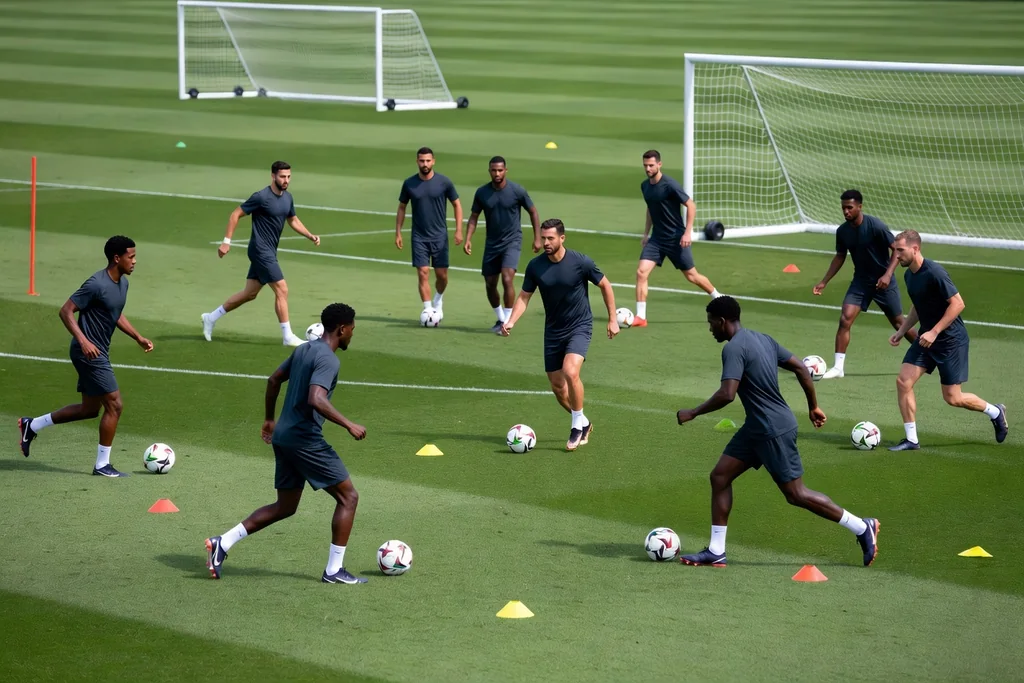
Friendly international matches occupy an awkward position in football. They are competitive fixtures in the sense that they are played to be won, but they sit outside any tournament and their results rarely decide anything. For national coaches, however, they are among the most useful tools available.
This article explains what national teams gain from friendlies, how squads are selected for international fixtures and why the process of building a national team is so different from building a club side.
What friendlies are for
A friendly exists to prepare. It gives a coach the chance to test a system, to look at players who have not yet played at international level and to rehearse combinations that will matter in a competitive fixture. Because the result carries little consequence, the coach can take risks he could not take in a qualifier.
That freedom is the whole point. A friendly is a laboratory: a place to find out whether a newcomer can handle the pace of international football, whether a tactical change works against a particular style of opponent, and whether an established group can adapt.
Why squad selection is different internationally
A national coach cannot sign players. He works with what his country produces, and his selection is constrained by nationality, form and availability rather than by budget. That single fact changes the entire job.
Selection is also constrained by the calendar. A coach sees his players for a few days at a time, several times a year, which means he has very little training time compared with a club manager. Squad decisions therefore have to be efficient: the group needs players who can adapt quickly rather than players who need long preparation.
Building a squad over time
National teams are built in layers. A coach inherits a group, identifies the positions where the squad is weak, and uses international windows to introduce players who can improve those areas. A player may be called up several times before he is genuinely part of the first eleven.
Injuries accelerate that process. When a regular is unavailable, a coach has to decide whether to call up a similar replacement or to try something different, and those decisions shape the squad for years afterwards.
What a coach learns from a friendly
A friendly produces information rather than points, and the information is worth more when the fixture is designed to test something specific.
- Whether a new player can cope with the speed of international football.
- How a tactical change performs against an unfamiliar opponent.
- Which combinations work without extensive training time.
- How the squad responds to travelling and playing in a short window.
- Which players are ready to be trusted in a competitive fixture.
Why friendly results are hard to read
Friendly results mislead because both teams are experimenting. Substitutions are more numerous, the intensity is often lower and a coach may deliberately play a system the team has not mastered. A convincing win can mean very little, and a heavy defeat can mean even less.
That is why supporters and journalists who judge national teams by friendly results tend to be disappointed when competitive football begins. The two types of match are played for different purposes, and only one of them is designed to produce a result worth remembering.
How to read an international window
The most useful thing to watch in an international window is who is playing and in what role, rather than what the score is.
| What to watch | What it suggests | Why it matters |
|---|---|---|
| New players starting | The coach is testing depth | It shows where the squad is thin |
| An unfamiliar system | A tactical experiment is under way | It may return in a competitive match |
| Heavy rotation between matches | The window is about assessment | Results carry less weight |
| A settled core retained | The coach is building continuity | It indicates likely starting players |
| Players used out of position | The coach is testing flexibility | It may solve a positional problem |
Preparation that does not show in the table
Friendlies will never be judged by their results, and that is not a flaw in the format. They exist to answer questions that only competitive football asks, and the answers they provide are the raw material from which a national team is assembled between tournaments.
Read next
How World Cup qualification works
Confederation groups, play-offs and the long road to the finals.
Continental tournaments and their formats
How continental championships are set up and what reaching the final stages takes.
International breaks explained
Why the club season pauses and how clubs and countries share the calendar.