
The Champions League format explained
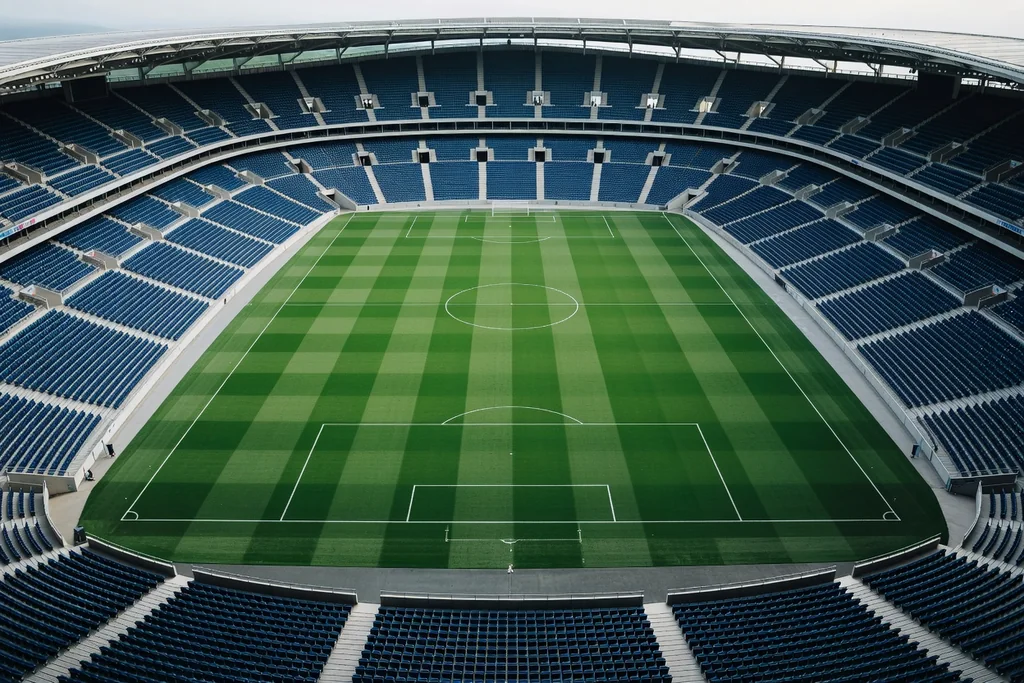
The Champions League is the most demanding club competition in European football, and its format has changed more than once in recent years. The current structure mixes a league phase with a knockout bracket, which makes it different from both a traditional group stage and a straight knockout cup. Understanding how the phases connect is the key to following it.
This article explains how the competition is organised from its earliest qualifying rounds to the final, why the format was changed and what supporters should check at the official source rather than assume from previous seasons.
From qualifying rounds to the main competition
Not every club enters the competition at the same point. Champions of smaller leagues and clubs from lower-ranked associations begin in qualifying rounds played in the summer, while clubs from the strongest leagues enter directly in the main phase. Those early rounds are knockout ties, and losing them does not necessarily mean leaving European football altogether, because a place in a secondary competition can follow.
The result is a long, layered entry system. By the time the main phase begins, the field has already been reduced and reshaped by several rounds of competitive football played before most domestic seasons have properly started.
The league phase
The main phase is a single table in which every club plays a set number of matches against a range of opponents. Rather than facing the same clubs twice, teams are drawn against different opponents from across the field, so the table reflects a wider spread of fixtures than a traditional group would.
Because everyone competes in one table, the consequences of each match are visible immediately. Clubs near the top are competing for a direct route into the knockout stage, clubs in the middle are fighting for a play-off place and clubs near the bottom risk elimination. The single table makes the whole competition legible at a glance, which was one of the stated reasons for the change.
The knockout stage
Once the league phase is complete, the field splits. Clubs finishing highest advance directly to the later knockout rounds, while those finishing below them enter an additional play-off round. From there the competition becomes a straightforward bracket of two-legged ties finishing with a single-match final.
The bracket is seeded so that the strongest performers in the league phase are rewarded with a theoretically easier path. That seeding is the thread that connects the league phase to the knockout rounds, and it is why finishing a place or two higher can matter a great deal.
What supporters should verify
Competition formats are reviewed periodically and details are adjusted between seasons. Memories of how the competition worked two or three years ago are not a reliable guide.
- The number of matches each club plays in the league phase.
- How many clubs advance directly and how many enter a play-off.
- The seeding rules that determine the knockout bracket.
- How elimination affects a club’s place in other European competitions.
- The dates of the draw, the knockout rounds and the final.
Why the format keeps changing
European club competition is a constant negotiation between sporting fairness, commercial value and the crowded domestic calendar. Formats are adjusted to spread matches more evenly, to guarantee more meaningful fixtures and to keep more clubs involved for longer. Whatever the merits of an individual change, the direction of travel is towards larger competition phases with more matches for more clubs.
| Phase | What it involves | What is at stake |
|---|---|---|
| Qualifying rounds | Knockout ties played in the summer | A place in the main phase |
| League phase | One table, a set number of varied fixtures | Direct progress or a play-off place |
| Knockout play-off | Two-legged ties for the clubs that finished lower | A place in the bracket |
| Knockout rounds | Two-legged ties through to the semi-finals | Progress towards the final |
| Final | A single match at a neutral venue | The trophy |
Reading the competition properly
Once the phases are clear, the Champions League becomes much easier to follow as a single connected story rather than a set of disconnected rounds. The league phase sets the field, the seeding shapes the bracket, and the knockout rounds reduce everything to a handful of matches. Each part is designed to feed the next.
It also helps to remember that the competition is one half of a wider European calendar. Clubs eliminated at certain stages continue in another competition rather than leaving the continent altogether, so a European campaign can change shape in the middle of a season. Following the competition through its phases, and knowing where an exit leads, is the difference between watching isolated matches and following a club’s European season as a whole.
Read next
How the knockout draws work
Seeding, restrictions and the mechanics that decide who meets whom in the bracket.
Two-legged ties and aggregate results
How a tie is decided over two matches and what changes in extra time and penalties.
The Europa and Conference Leagues compared
The three continental competitions side by side and how clubs move between them.