
How the knockout draws work
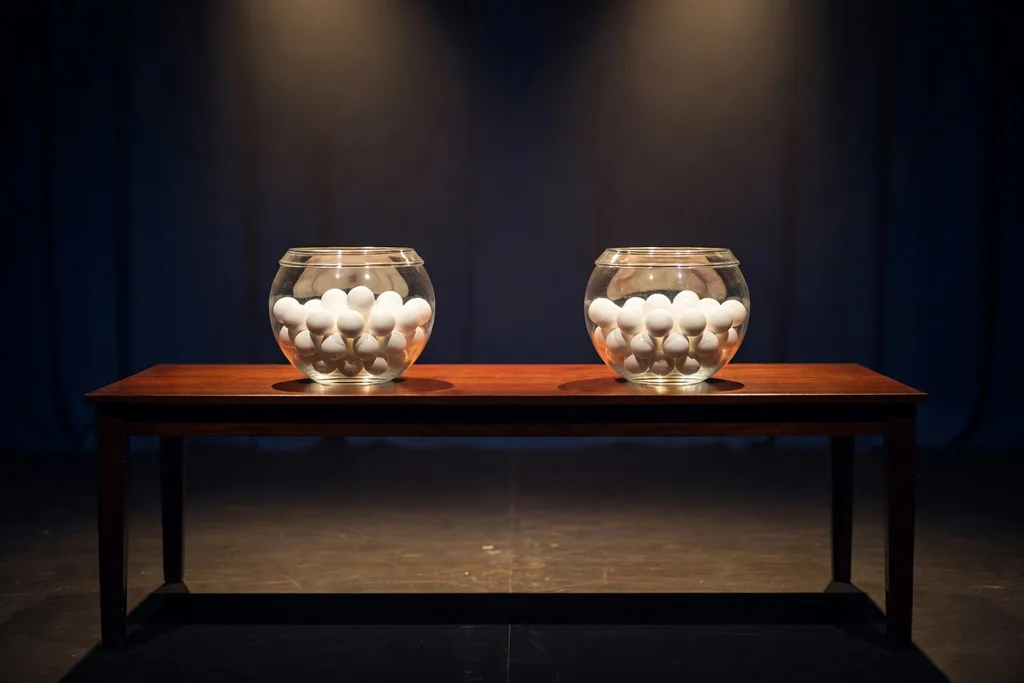
A knockout draw looks like a simple ceremony: names are taken from bowls and pairs are formed. In practice a draw is governed by a set of rules about seeding, country protection and the sequence of the bracket, and those rules determine which ties are possible and which are excluded before a ball is drawn.
This article explains how knockout draws work in European club competition, what those restrictions are for, and why the outcome of a draw is never quite as random as it appears.
What a draw is actually doing
A draw assigns opponents for the next round. Because the bracket is decided in advance, the draw is really about placing clubs into specific slots in a structure rather than simply producing pairs. Where a club lands in the bracket determines who it can meet in the following rounds as well as in the immediate tie.
That is why the position of a club in the bracket matters as much as its opponent. Two clubs can be drawn against opponents of similar strength and still end up with very different routes to the final purely because of the side of the bracket they occupy.
Seeding and what it is for
Seeding is the practice of separating stronger or better-placed clubs so they cannot meet in the earliest rounds. In a competition with a league phase, seeding normally reflects performance in that phase, which gives clubs a sporting reason to finish as high as they can.
The principle is that reward should follow performance. A club that has won more matches in the league phase is placed so that it faces, on paper, a more favourable path. Seeding does not guarantee an easy tie, and many seeded clubs have been eliminated by unseeded opponents, but it deliberately tilts the odds.
Country protection and other restrictions
Draws also apply restrictions designed to keep the competition spread across countries and to avoid fixtures that broadcasters and supporters would find repetitive. Clubs from the same association are commonly kept apart until later rounds.
These restrictions can produce surprising outcomes. When only a few valid pairings remain, the draw becomes constrained, and supporters sometimes see a tie that looks impossible until the remaining options are worked through. There is no manipulation involved, only arithmetic.
How a draw is conducted
The mechanics are designed to be transparent and reproducible, with independent witnesses and clear rules about which clubs can meet.
- Clubs are divided into seeded and unseeded groups according to the rules.
- Restrictions on same-country and previously faced opponents are applied.
- Balls are drawn for one side of the tie, then the other.
- The bracket position of each club is recorded as the draw proceeds.
- The schedule of dates and kick-off times is confirmed afterwards.
Why the bracket matters
The bracket turns a set of individual ties into a route. A club can look at the draw and see not only its next opponent but also the field it would have to pass through to reach the final, and that shapes how supporters and coaches assess the campaign.
| Element of a draw | What it controls | Where it is published |
|---|---|---|
| Seeding | Which clubs can meet in the earliest rounds | Competition regulations |
| Country protection | Whether clubs from one association can be paired | Competition regulations |
| Bracket position | The route a club would take to the final | Official draw results |
| Home and away order | Which club hosts the first leg | Official draw results |
| Match dates | When each tie is played | Competition calendar |
A draw is a structure, not a lottery
Treated as a lottery, a knockout draw invites conspiracy theories and disappointment. Treated as a structure, it becomes something more interesting: a set of constraints that produces a bracket, complete with a route, an order of home and away legs and a set of possible future opponents. The rules are published, and once you know them the draw is easy to follow.
Supporters can also read the bracket as a preview. Once the draw is complete, the possible semi-final and final opponents are known, and those fixtures stop feeling abstract. A tie that looked straightforward in isolation can turn out to sit on the harder side of the bracket, and a club that survives a difficult quarter of the draw carries that achievement with it into the next round.
There is a practical benefit for supporters too. Knowing the restrictions makes it possible to predict which opponents are actually available before the balls are drawn, which turns the ceremony from a mystery into something that can be followed with a pencil and a list. Once the constraints are understood, the draw becomes one of the more interesting parts of the competition rather than an interval to sit through.
Read next
The Champions League format explained
How the competition runs from the league phase through to the knockout rounds.
Two-legged ties and aggregate results
How a tie is decided over two matches and what changes in extra time and penalties.
The Europa and Conference Leagues compared
The three continental competitions side by side and how clubs move between them.