
Finals at neutral venues
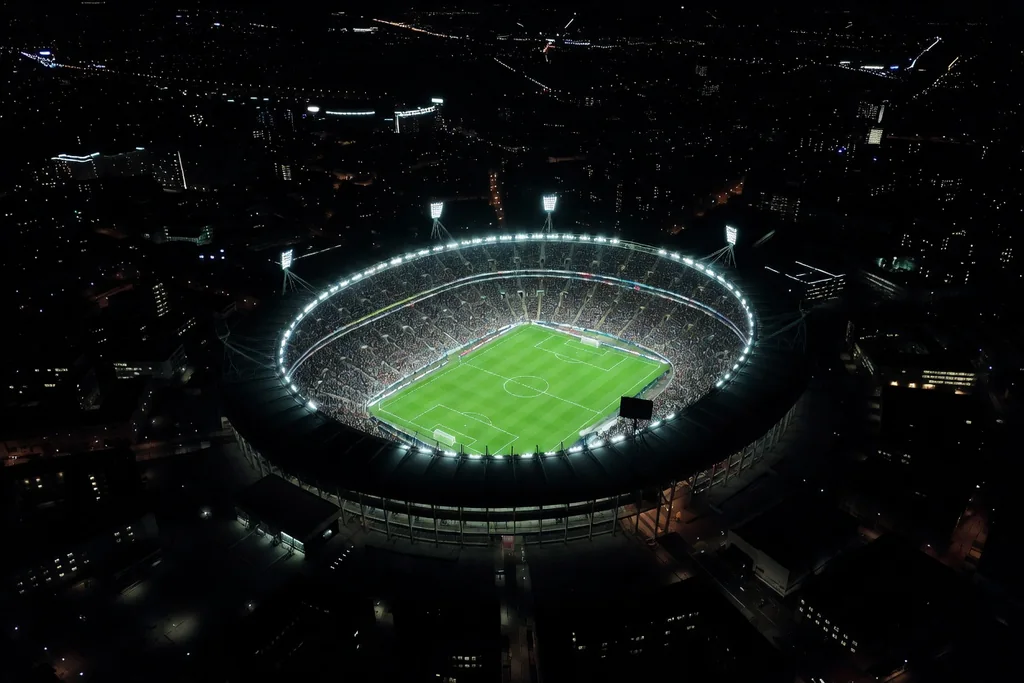
European club finals are played at neutral venues chosen in advance, often years before the match takes place. That single decision shapes everything about the occasion: the atmosphere, the ticketing, the travel and the way both clubs prepare. Neither finalist enjoys home advantage, and neither is asked to defend a ground it knows better than anyone.
This article explains why finals are staged at neutral venues, how those venues are chosen, and what the arrangements mean for the clubs and supporters involved.
Why neutral venues
The reasoning is straightforward fairness. If a final were played at one finalist’s ground, that club would hold a significant sporting advantage entirely unrelated to its performance in the competition. A neutral venue removes that advantage and turns the final into a genuinely even contest decided on the pitch.
There is a practical dimension as well. A final is a major event with a large global audience, and a neutral venue can be selected on the basis of capacity, facilities and accessibility rather than on the accident of which clubs reach it.
How venues are chosen
Venues are selected through a bidding and assessment process well in advance. Stadium capacity, transport links, accommodation, safety arrangements and the ability to host a large travelling crowd all form part of the evaluation. Awarding the final early gives cities and clubs years to prepare.
Because the decision is made before the finalists are known, the venue is never chosen to suit a particular club. That is precisely the point: the stadium must be suitable for whoever qualifies, not for the club that eventually does.
What it means for the finalists
Both clubs face the same logistical challenge. A final at a neutral venue is effectively an away match with no home crowd to lean on, so the travelling support becomes unusually important. Clubs typically organise their preparation around the journey, the unfamiliar stadium and the different routines of final week.
Preparation also includes the practicalities that a home fixture would not require: acclimatising to a new pitch, managing a longer trip and handling the media demands that surround a showpiece occasion.
What supporters have to plan for
For supporters, a final is the most complicated trip of the season, and the arrangements are normally controlled by the competition organiser and the two clubs.
- Tickets are allocated through the clubs rather than sold openly.
- Travel and accommodation near the venue book up quickly.
- Neutral sections exist, but the two ends are usually allocated to finalists.
- Entry requirements and local transport arrangements apply to everyone.
- Official channels are the only reliable source for allocation details.
The occasion as a whole
The neutral final has become one of the defining events of the football calendar, with a week of build-up, a shared city and two sets of supporters arriving from different directions. None of that would be possible if the match were hosted by one of the finalists.
| Element | How it works | Who decides |
|---|---|---|
| Venue | Selected in advance through a bidding process | The competition organiser |
| Ticket allocation | Split between the two finalists and neutral sales | The competition organiser and clubs |
| Kick-off time | Set to suit the global broadcast audience | The competition organiser |
| Pitch and facilities | Prepared to competition standards | Venue and organiser |
| Security and transport | Planned with local authorities | Host city and organiser |
A final that belongs to neither side
The neutral venue is not a logistical inconvenience to be tolerated; it is the mechanism that makes a fair final possible. Neither club gets a home crowd, neither club gets a familiar pitch, and both have to solve the same problems to win. That equality is what the format is protecting.
It is also worth noting what the neutral venue does to the idea of home advantage across a whole competition. Every other round is played over two legs partly so that both clubs host once, and the final is the one match where that balance cannot be achieved by scheduling. Playing it in a neutral stadium is the closest the competition can get to the same fairness in a single match, and the atmosphere that results is a product of that choice rather than something that happens by accident.
There is also a commercial logic behind the choice. A neutral venue can be selected for capacity and facilities rather than for the accident of which clubs reach the final, and that makes the occasion easier to plan and easier to sell to a global audience. The competition benefits, the host city benefits and the finalists compete on terms neither of them chose, which is precisely the point of playing the match away from both home grounds.
Read next
The Champions League format explained
How the competition runs from the league phase through to the knockout rounds.
How the knockout draws work
Seeding, restrictions and the mechanics that decide who meets whom in the bracket.
Two-legged ties and aggregate results
How a tie is decided over two matches and what changes in extra time and penalties.